


Where your water comes from
Your water starts as rain. It collects in nine reservoirs, is cleaned at two treatment plants, and travels through pipes to your tap.
The supply is surface water held in reservoirs on Aquidneck Island and on the mainland in Tiverton and Little Compton.
- 9reservoirs
- 9dams owned and maintained by the City
- 2water treatment plants
- 3.8billion gallons of usable storage when full
Map of the reservoirs
The reservoirs are spread across five towns. Numbers on the map match the list and the table below.
Aquidneck Island
- North Easton Pond, Newport and Middletown
- South Easton Pond, Newport
- Paradise Pond, Middletown
- Gardiner Pond, Middletown
- St. Mary’s Pond, Portsmouth
- Sisson Pond, Portsmouth
- Lawton Valley Reservoir, Portsmouth
Mainland
- Nonquit Pond, Tiverton
- Watson Reservoir, Little Compton
From rain to your tap
Rain falls
Rain and streams drain about 18.6 square miles of land in five towns.Reservoirs fill
Nine reservoirs store the water. A dam holds each one in place.Water moves
Pipelines and pumping stations connect the reservoirs and carry water to the plants.Plants clean it
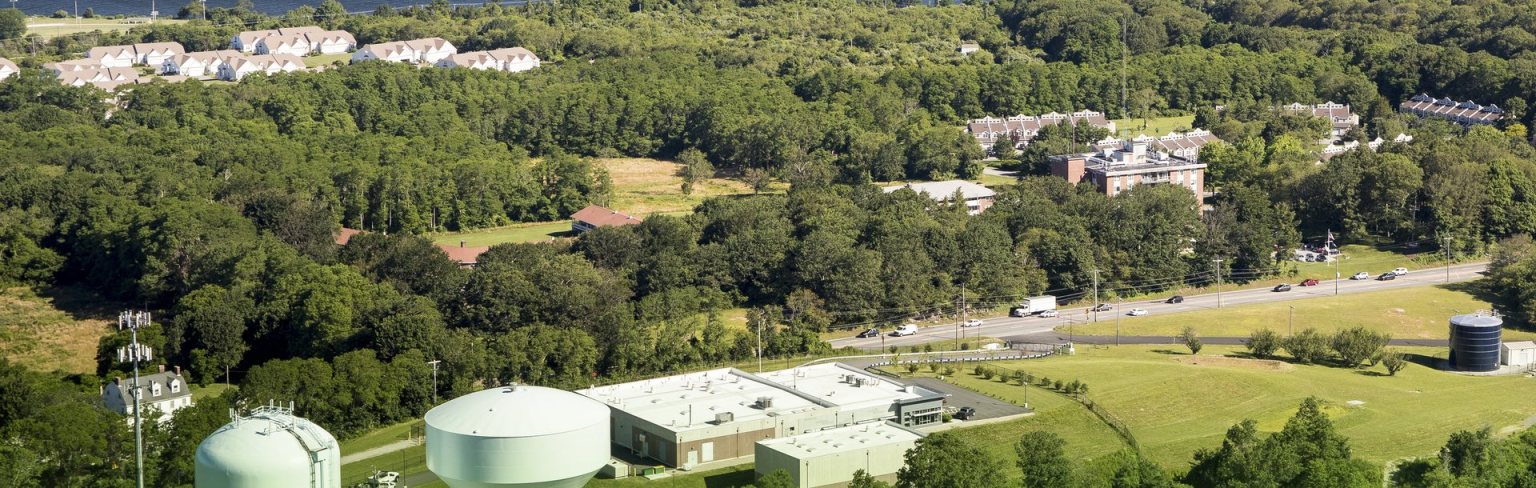
Station 1 in Newport and Lawton Valley in Portsmouth can treat up to 16 million gallons a day together.Pipes deliver it
Treated water reaches Newport, Middletown and part of Portsmouth.
Newport Water also sells treated water to the Portsmouth Water and Fire District and Naval Station Newport.
The nine reservoirs
Seven reservoirs are on Aquidneck Island. Two are on the mainland. The mainland reservoirs hold a little more than half of the total supply.
| Reservoir | Town | Million gallons | Relative size |
|---|---|---|---|
| Aquidneck Island | |||
| North Easton Pond | Newport and Middletown | 278 | |
| South Easton Pond | Newport | 375 | |
| Paradise Pond (also called Nelson Pond) | Middletown | 66 | |
| Gardiner Pond | Middletown | 290 | |
| St. Mary’s Pond | Portsmouth | 189 | |
| Sisson Pond | Portsmouth | 117 | |
| Lawton Valley Reservoir | Portsmouth | 422 | |
| Mainland | |||
| Nonquit Pond | Tiverton | 400 | |
| Watson Reservoir | Little Compton | 1,677 | |
| All nine reservoirs | 3,815 | ||
Storage is the usable volume when each reservoir is full. Individual figures are rounded.
Water in storage, 2022 to 2026
The reservoirs fill in winter and spring and are drawn down in summer and early fall. On November 17, 2026 the system was 89 percent full. Full is 3,815 million gallons.
See the monthly numbers
| Year | Jan | Feb | Mar | Apr | May | Jun | Jul | Aug | Sep | Oct | Nov | Dec |
|---|---|---|---|---|---|---|---|---|---|---|---|---|
| 2022 | n/a | n/a | 97 | 98 | 96 | 92 | 85 | 73 | 66 | 65 | 65 | 69 |
| 2023 | 80 | 87 | 90 | 89 | 90 | 85 | 85 | 78 | 73 | 73 | 72 | 75 |
| 2024 | 82 | 88 | 97 | 98 | 97 | 96 | 93 | 89 | 81 | 75 | 66 | 72 |
| 2025 | 79 | 85 | 89 | 95 | 98 | 97 | 90 | 81 | 72 | 67 | n/a | 70 |
| 2026 | 74 | 75 | 88 | 94 | 92 | 88 | 86 | 85 | 81 | 85 | 88 | n/a |
How the supply grew
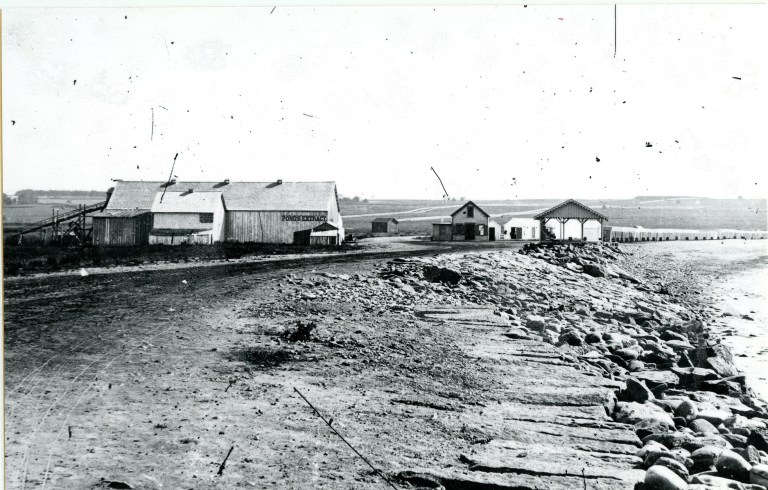
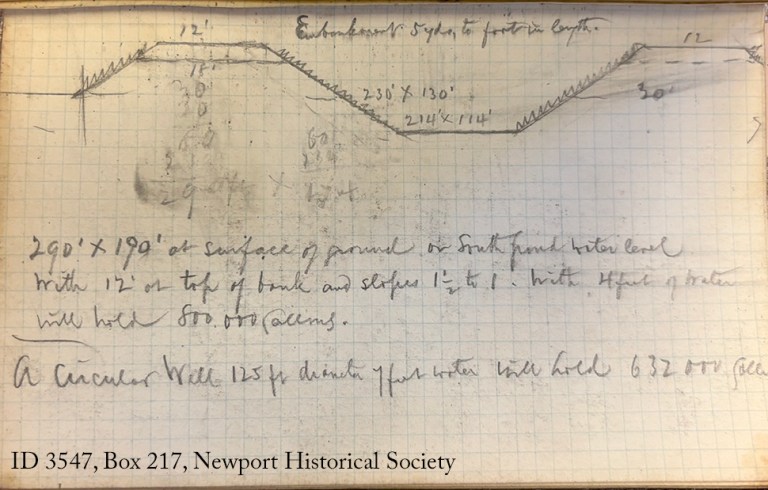
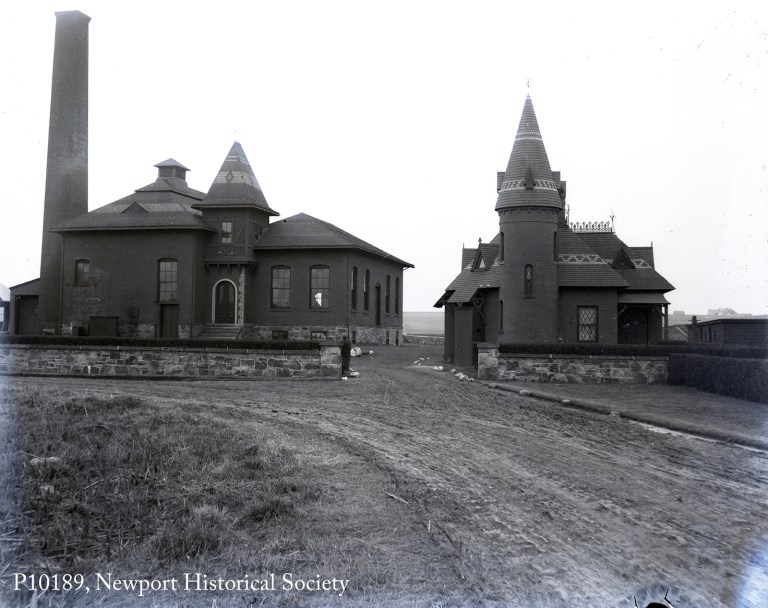
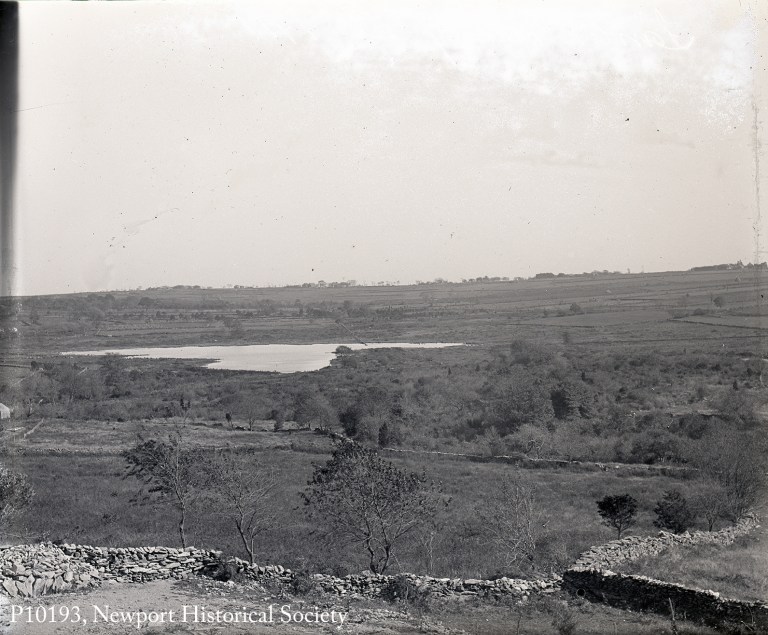
The public water supply dates to 1876. Reservoirs were added one at a time through 1967.
- Before 1876Newport relied mainly on the Touro Street Spring and private wells.
- 1876The City accepted George Norman’s plan for a waterworks. Work began on North and South Easton Ponds.
- 1877 to 1928Five more reservoirs were added: Lawton Valley, St. Mary’s and Sisson in Portsmouth, and Paradise (Nelson) and Gardiner in Middletown.
- 1881The Newport Water Works Company was formed to run the system.
- 1910The first modern treatment plant opened on Marlborough Street.
- 1936The City of Newport took over ownership and operation.
- 1942The Lawton Valley treatment plant was built to meet wartime demand.
- 1948Nonquit Pond in Tiverton was added.
- 1967Watson Reservoir in Little Compton was added.
- 1991The Station 1 treatment plant was added.
- 2014A new Lawton Valley plant and an upgraded Station 1 were completed.
Read the full history on the Drinking water system page.
Dams
A dam holds each reservoir in place. The City owns all nine dams and is responsible for their care.
Inspected
Dams are regulated by the Rhode Island Department of Environmental Management. Inspections are done by a qualified engineer. The City Council approved the 2026 inspection cycle in October 2026.Maintained
Routine work includes mowing and clearing embankments, keeping spillways open, and checking reservoir levels each week.Improved
Dam repair and resilience work is part of the capital plan. Work at Easton Pond is under way. See water capital projects.
Protecting the source
What happens on the land reaches the water. The reservoirs sit in a drainage area of about 11,920 acres in Newport, Middletown, Portsmouth, Tiverton and Little Compton. Newport Water has purchased 350 acres of conservation easements to protect raw water quality.
Water quality is tracked from the reservoir to the tap. Results are published each year in the Consumer Confidence Report.
Learn more
- How drinking water works
- Drinking water system
- Water quality monitoring
- Water treatment and quality
- Contact us
Last updated November 18, 2026. Newport Department of Utilities, Water Division.
