
2025 Water Quality Dashboard
Detected Level vs Maximum Contaminant Level (MCL)
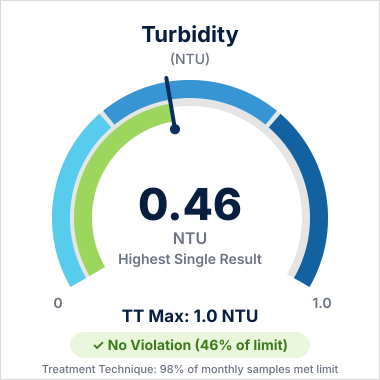
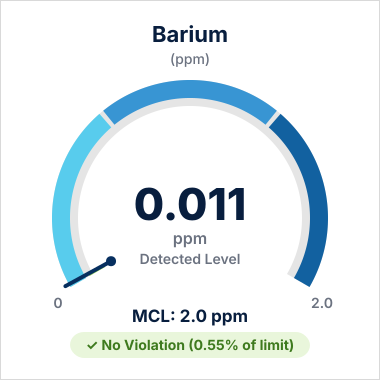
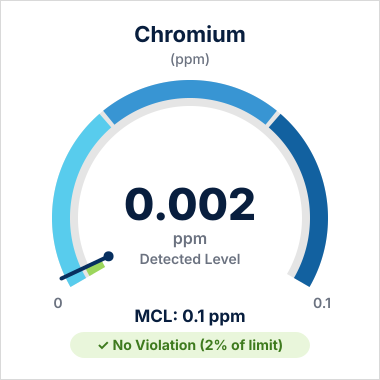
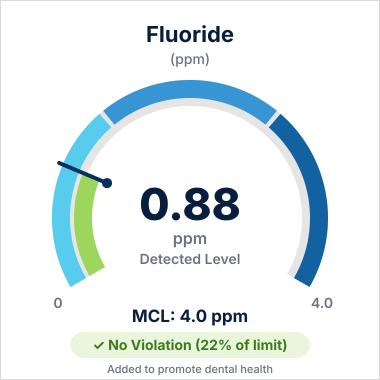

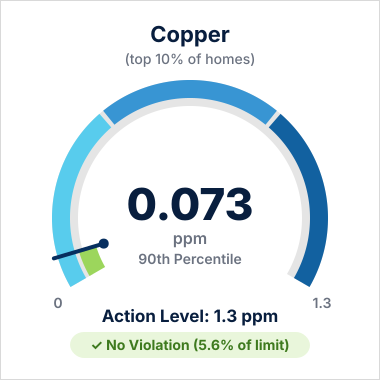
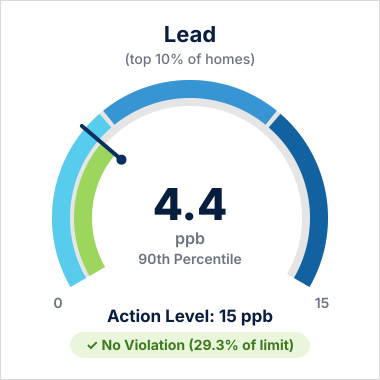
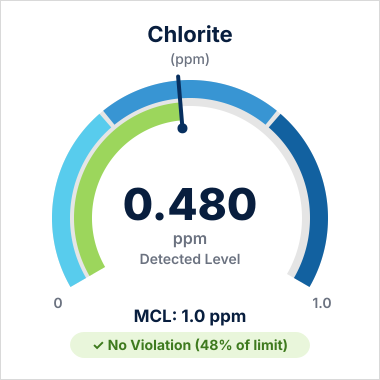
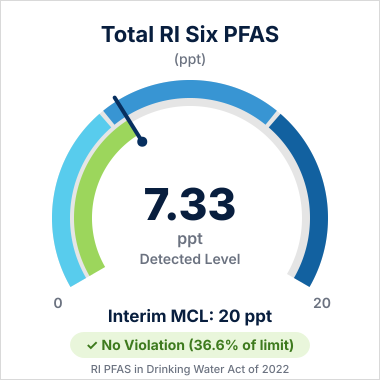
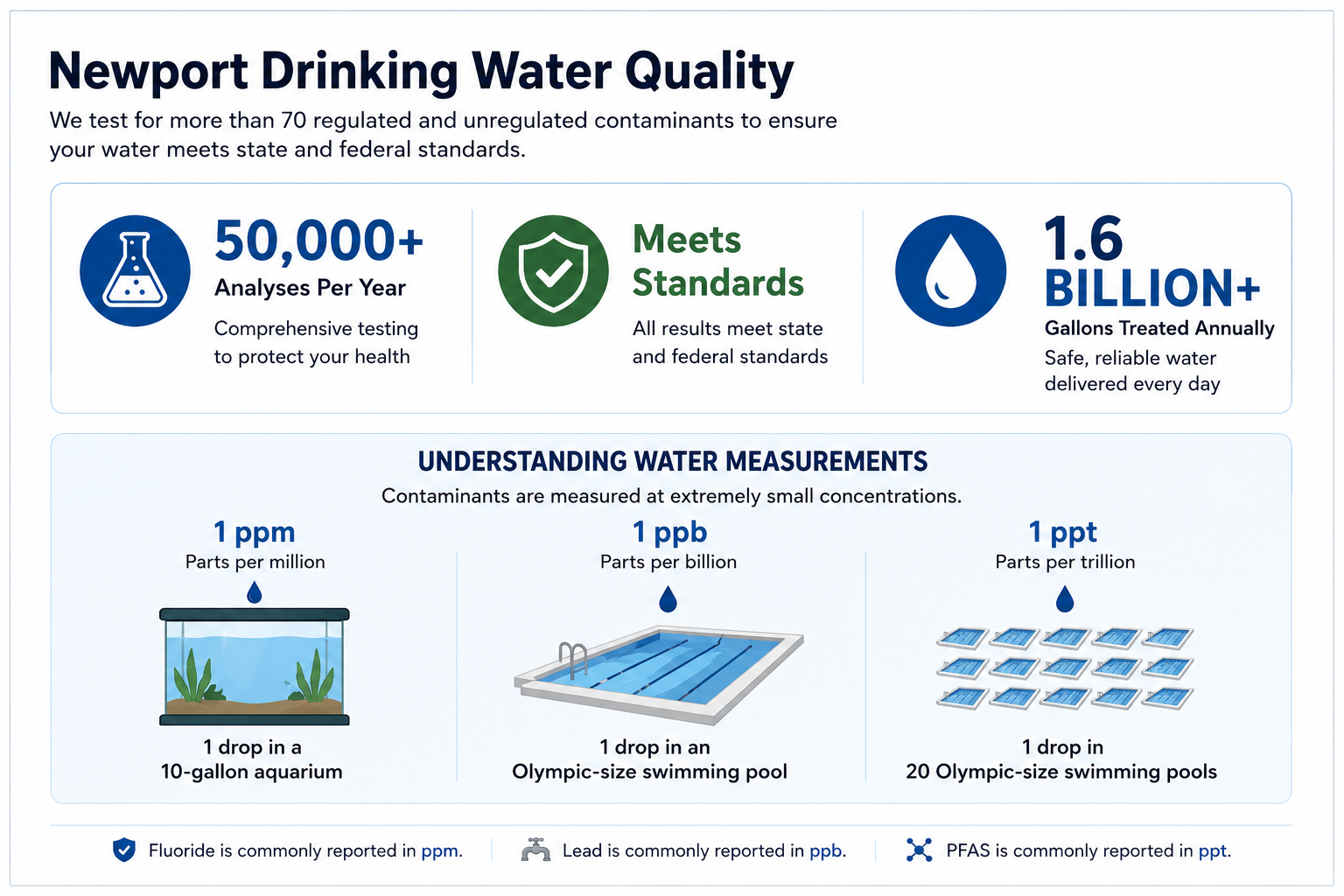
Newport Water had no violations of any Federal or State drinking water standard in 2025. All regulated contaminants were below their Maximum Contaminant Levels, and 90th percentile lead and copper results were below their Action Levels.
Complete 2025 results, including all detected contaminants, lead and copper monitoring, and PFAS data, are available in the 2025 Annual Water Quality Report (accessible web version). For this data in an alternative format, contact the Department at (401) 845-5600.
The Newport Water Division (NWD) provides safe, clean, and reliable drinking water to customers across Aquidneck Island. Water is monitored against the Federal and State regulations established by the U.S. Environmental Protection Agency (EPA) and the Rhode Island Department of Health (RIDOH), and results are reported each year in the Consumer Confidence Report. This page summarizes how water quality is monitored, what is in the water, and where to find detailed annual reports.
Quick Facts
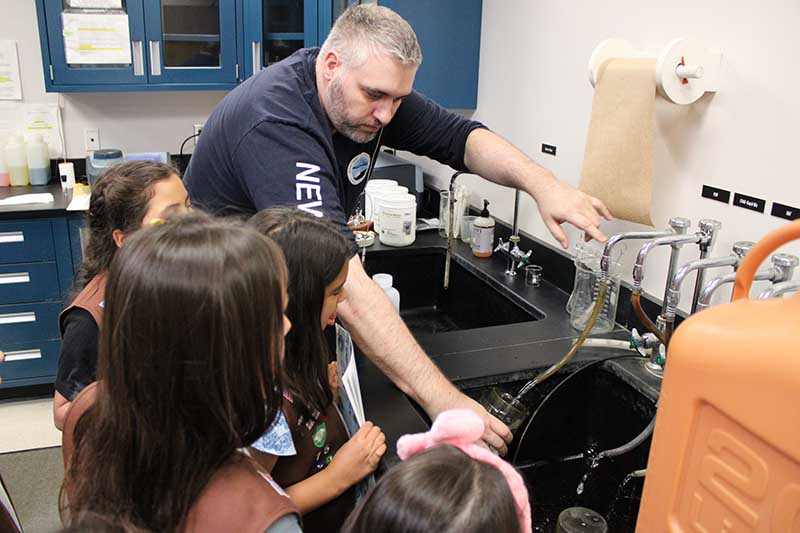
Schedule a Water Treatment Plant Tour
Curious about where your drinking water comes from? Schools, community groups, and civic organizations are welcome to tour our modern treatment facilities. Call 401-845-5600, we would love to show you around.
Why Water Quality Matters
Clean drinking water is the result of careful science, strict regulation, and community stewardship.
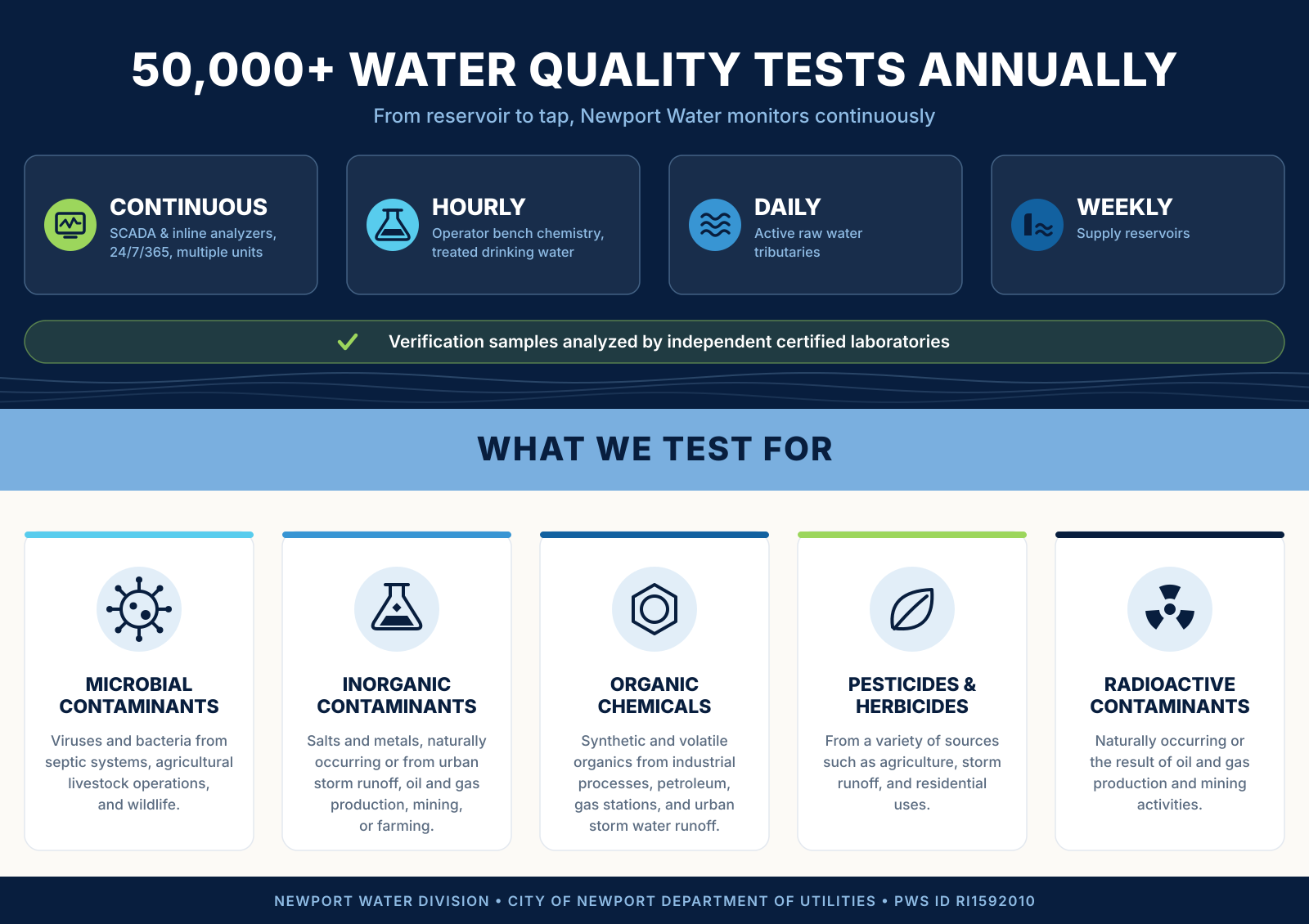
The EPA and RIDOH set regulatory limits for substances in public drinking water. NWD ensures compliance with these regulations through a rigorous monitoring and testing program, ensuring that water from the reservoirs to the tap is safe to drink.
To protect source water, NWD has acquired more than 350 acres of conservation easements, preserving the natural lands that feed the reservoirs.
Continuous Water Quality Monitoring and Transparency
Regular testing measures water against the Maximum Contaminant Levels (MCLs) set by EPA and RIDOH. In compliance with the Safe Drinking Water Act, NWD publishes an Annual Water Quality Report (also known as a Consumer Confidence Report) summarizing test results and system performance each year. Reports dating back to 2004 are available below and provide a year-by-year record of Newport’s water quality results.
Consumer Confidence Reports
The 2025 Annual Water Quality Report is available as an accessible web page in addition to the PDF listed below. Reports for prior years are available as PDF downloads. To request any report in an alternative format, contact the Department at (401) 845-5600.
How We Treat Your Drinking Water
NWD operates two state-of-the-art water treatment plants serving Aquidneck Island: Station 1 in Newport and Lawton Valley in Portsmouth. Both plants use mirrored treatment processes and were the first in Rhode Island to use advanced multi-stage treatment technology. Combined treatment capacity is up to 16 million gallons per day.
Raw water is drawn from nine surface reservoirs across Newport, Middletown, Portsmouth, Tiverton, and Little Compton. Primary water supplies include South Easton Pond (Newport), Lawton Valley Reservoir and St. Mary’s Pond (Portsmouth), and Watson Reservoir (Little Compton).
These reservoirs are connected through a network of pipelines and pumping stations that transport raw water to the treatment plants. There, water undergoes a series of monitored processes to meet or exceed all Federal and State drinking water standards.
Treatment Process
The treatment process used at both Station 1 and Lawton Valley transforms raw surface water into safe drinking water through seven stages.
After treatment, water is stored and distributed through a connected network of pipes, storage tanks, and pumping stations. This system delivers reliable, high-quality water to homes, businesses, and institutions across the island.
History
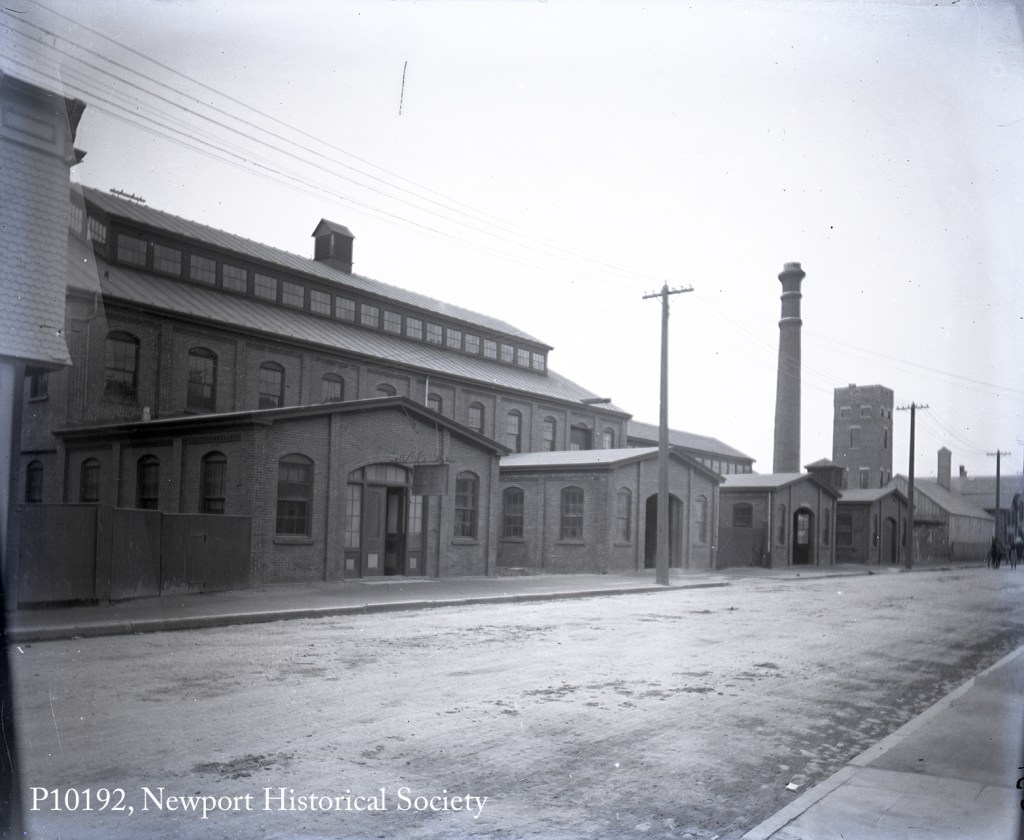
At the request of the City, the Newport Water Works Company built Newport’s first modern water treatment plant in 1910 on Marlborough Street, which was later demolished.
As demand grew, particularly during World War II, the Lawton Valley Water Treatment Plant in Portsmouth was constructed in 1942 to expand capacity and support the war effort. Decades later, in 1991, the Station 1 Water Treatment Plant in Newport was built to meet modern water quality standards and the community’s increasing needs.
By 2004, a comprehensive Water Treatment Plant Compliance Evaluation determined that the original Lawton Valley facility had exceeded its useful life and could not be upgraded cost-effectively. The study also found that Station 1 required significant improvements to reliably achieve its design capacity of 9 million gallons per day (MGD), as it was limited to approximately 6 MGD without risking water quality.
Due to the scale and cost of required upgrades, implementation was delayed until 2012 to 2013, when NWD secured an $85 million loan through the Drinking Water State Revolving Fund (DWSRF), administered by the Rhode Island Infrastructure Bank. This investment funded the complete replacement of Lawton Valley with a new, state-of-the-art facility and major upgrades to Station 1. Both construction projects were completed in 2014.
The 2014 modernization replaced the original Station 1 pulsating clarifier with Dissolved Air Flotation (DAF), the current clarification process at both plants. Both facilities now use mirrored treatment processes, ensuring:
- Operational flexibility and staff interchangeability between plants
- Standardized chemicals, controls, and equipment
- Consistent, high-quality water treatment across the system
These improvements made Lawton Valley and Station 1 the first advanced treatment plants in Rhode Island, setting a benchmark for water quality and reliability statewide.