
Newport’s Clean Water Journey: From Combined System Overflow to Integration
The Water Pollution Control Division (WPC) has led a multi-phase, long-term effort to reduce combined sewer overflows (CSOs) and protect the water quality of Newport Harbor since the 1970s. Now, WPC is taking a new integrated approach to better protect the Harbor and our community.
Related Reports & Resources
Overview
WPC’s CSO Control Program is part of a mandated 20-year System Master Plan under a Consent Decree with the EPA and RIDEM. The goal is to reduce combined sewer overflow (CSO) events through infrastructure upgrades, stormwater management, and long-term planning.
Read more…
Newport’s sewer system, built in the 1870s, was originally designed a single-pipe system that carried stormwater and wastewater. Since the 1970s, WPC has been working to separate stormwater and wastewater systems to reduce the occurrence of overflows. Today, Newport’s system contains both separate and combined components, during heavy rain events combined components can become overwhelmed, which may trigger a combined.
When this happens, excess flow is treated and disinfected at one of the City’s two permitted CSO facilities before entering the harbor:
- Washington Street CSO Treatment Facility
- Wellington Avenue CSO Treatment Facility
A New Chapter in Protecting Our Harbor and Community
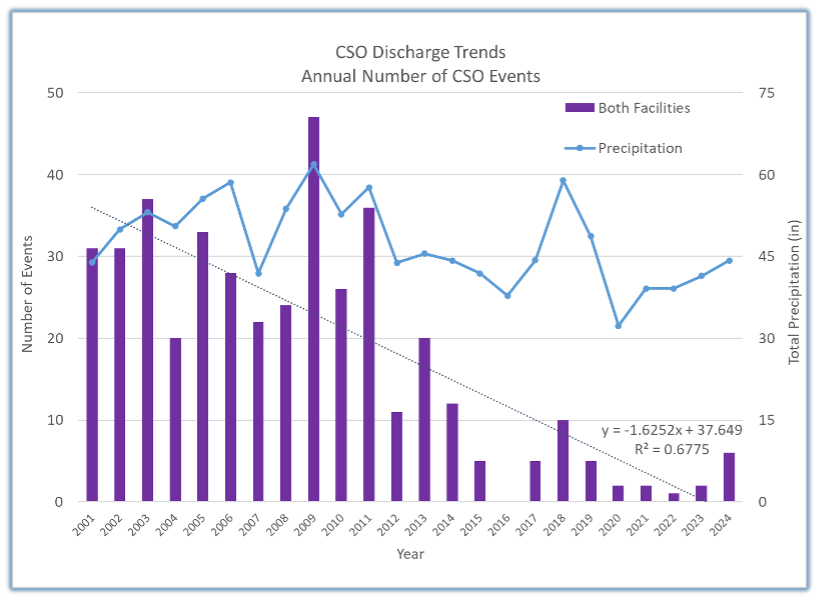
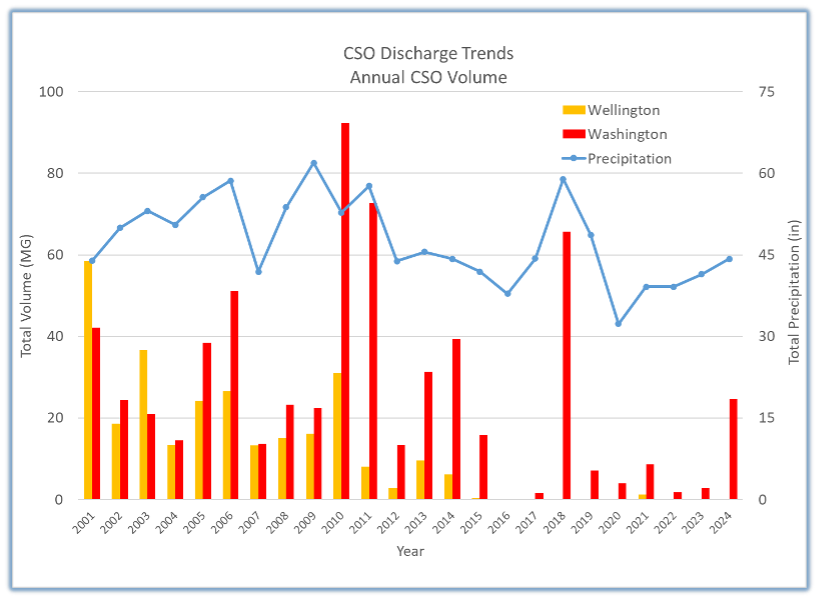
After two decades of innovation and investment, WPC has completed the major upgrades that cut sewer overflows by more than 80%. As a result, every combined sewer overflow (CSO) is now treated and disinfected before it reaches the harbor. Stormwater, not CSOs, is now the primary challenge to water quality.
That’s why we’re turning the page. WPC is embracing a smarter, integrated approach to water management, linking clean water, flood protection, and climate resilience in a unified strategy for the future.
Where We Are Now
We’ve built the infrastructure, now we’re building the future.
A Smarter Future: Integrated Planning
What is Integrated Planning?
WPC’s Integrated Water Quality and Resilience Strategy combines:
- CSO compliance
- Stormwater (MS4) pollution control
- Flood mitigation and green infrastructure
- Climate adaptation
- Community-centered, affordable investments
We’re aligning with the EPA’s Integrated Municipal Planning Framework to ensure that every dollar we spend addresses multiple challenges, protecting water, reducing flooding, and supporting community resilience.
Why It Matters:
What We’ve Achieved
Over the last 20 years, the CSO Program delivered transformative results:
Annual Enterococci Exceedance Summary for Harbor Waters with Background Weather Conditions
| Year | Total Samples Collected | Total Enterococci Exceedances | Enterococci Exceedances Associated w/ Rainfall (No CSO Event) | Enterococci Exceedances Preceded by 24+ Hours of Dry Weather | Enterococci Exceedances 0–2 Days After a CSO Event |
|---|---|---|---|---|---|
| 2019 | 500 | 5 | 2 | 1 | 2 |
| 2020 | 520 | 6 | 3 | 3 | 0 |
| 2021 | 520 | 0 | 0 | 0 | 0 |
| 2022 | 510 | 1 | 1 | 0 | 0 |
| 2023 | 500 | 2 | 1 | 0 | 1 |
| 2024 | 540 | 9 | 8 | 1 | 0 |
| Total | 3,090 | 23 | 15 | 5 | 3 |
Total Samples Collected: 500
Total Enterococci Exceedances: 5
Enterococci Exceedances Associated w/ Rainfall (No CSO Event): 2
Enterococci Exceedances Preceded by 24+ Hours of Dry Weather: 1
Enterococci Exceedances 0–2 Days After a CSO Event: 2
Total Samples Collected: 520
Total Enterococci Exceedances: 6
Enterococci Exceedances Associated w/ Rainfall (No CSO Event): 3
Enterococci Exceedances Preceded by 24+ Hours of Dry Weather: 3
Enterococci Exceedances 0–2 Days After a CSO Event: 0
Total Samples Collected: 520
Total Enterococci Exceedances: 0
Enterococci Exceedances Associated w/ Rainfall (No CSO Event): 0
Enterococci Exceedances Preceded by 24+ Hours of Dry Weather: 0
Enterococci Exceedances 0–2 Days After a CSO Event: 0
Total Samples Collected: 510
Total Enterococci Exceedances: 1
Enterococci Exceedances Associated w/ Rainfall (No CSO Event): 1
Enterococci Exceedances Preceded by 24+ Hours of Dry Weather: 0
Enterococci Exceedances 0–2 Days After a CSO Event: 0
Total Samples Collected: 500
Total Enterococci Exceedances: 2
Enterococci Exceedances Associated w/ Rainfall (No CSO Event): 1
Enterococci Exceedances Preceded by 24+ Hours of Dry Weather: 0
Enterococci Exceedances 0–2 Days After a CSO Event: 1
Total Samples Collected: 540
Total Enterococci Exceedances: 9
Enterococci Exceedances Associated w/ Rainfall (No CSO Event): 8
Enterococci Exceedances Preceded by 24+ Hours of Dry Weather: 1
Enterococci Exceedances 0–2 Days After a CSO Event: 0
Total Samples Collected: 3,090
Total Enterococci Exceedances: 23
Enterococci Exceedances Associated w/ Rainfall (No CSO Event): 15
Enterococci Exceedances Preceded by 24+ Hours of Dry Weather: 5
Enterococci Exceedances 0–2 Days After a CSO Event: 3
From Projects to Progress: Why the Shift Matters
- CSOs were once the biggest water quality issue, now they’re not.
- Yes, overflows can still happen during extreme weather, but every CSO is treated and disinfected, and no longer causes water quality violations.
- Stormwater runoff from streets and neighborhoods is now the leading cause of harbor pollution.
- Climate-driven rain events and aging stormwater systems add new complexity.
We need a more adaptable, holistic strategy that protects water, reduces flooding, and supports Newport’s future.
What’s Coming Next
Together, we’ve come a long way, from overflow to integration.
The next chapter is about resilience, clean water, and a thriving Newport for generations to come.
CSO Discharge Volume Trends Since 2001
CSO Discharge Frequency Trends Since 2001