
All residential, commercial, and governmental properties served by the Newport Water Division (NWD) are metered, providing 100% distribution metering. The NWD meter staff are responsible for obtaining meter readings and ensuring water consumption is measured accurately and consistently.
Schedule a Meter Appointment
If you received a door tag, letter, email, or request from Newport Water Division, use the link below to choose an available appointment window.
The scheduling page shows only available appointment windows. It does not show internal staff calendars or private calendar details.
No payment is required for this appointment. Newport Water Division staff will not ask for banking, credit card, or payment information at the door.
Need help scheduling? Call Water Meter Services at 401-845-5606 during business hours.
What We Do
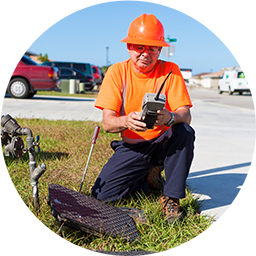
Meter Readings
- Meter staff perform regular readings to ensure monthly bills accurately reflect water consumption.
- When a customer is selling or transferring ownership of a property serviced by the Newport Water Division, a Request for Final Reading for Sale of Real Estate Form must be completed and submitted, usually by the seller’s realtor or attorney. Meter staff will conduct a meter reading so that a final bill can be generated for the seller. The buyer and seller will be provided essential account details and information regarding any outstanding charges.
- Meter staff perform meter readings for tenancy changes that capture water usage during a specific timeframe to ensure accurate billing between outgoing and incoming tenants. To request this service, property owners must complete and submit a Request for Tenancy Change Form.
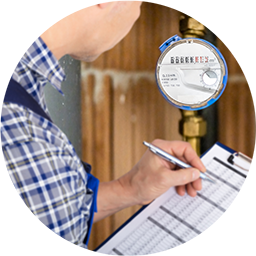
Meter Tests
- Customers may request a meter test assessing meter performance accuracy by completing and submitting a Meter Test Request Form.
- If the meter is found to exceed the allowable margin of error, more than 2 percent, the meter test fee will be fully refunded.
- The meter test will be scheduled at a mutually convenient time and the customer may witness the test. Water service to the property will be temporarily terminated during the meter test but reactivated immediately upon completion.
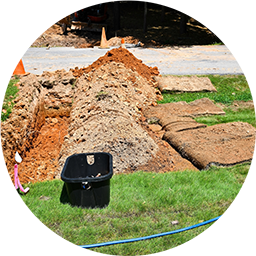
Meter Installations and Inspections
- Meter staff perform meter installations and inspections for approved Water Service Applications for new water service, irrigation service, and water service renewals, and approved Temporary Water Service Applications for purposes such as construction.
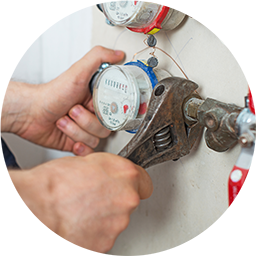
Meter Maintenance and Repairs
- Meter staff replace meters that have reached their useful lifespan, perform preventative maintenance, and address any issues with water meters to maintain accurate service.
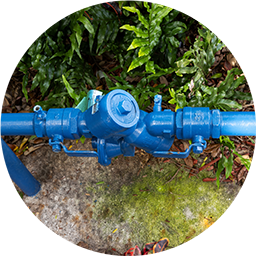
Backflow Prevention Device Inspections
- Following NWD’s approval of a Water Service Application, the customer must, at their expense, properly install, test, and maintain any backflow prevention device required by NWD. Meter staff perform backflow prevention device inspections to verify the device has been installed correctly and meets all requirements.
Cellular Meter Reading System
NWD is modernizing its system by replacing radio-read meters with cellular smart meters as budget allows. These devices enable real-time data collection and allow customers to track water use anytime through EyeOnWater, a free, secure app and online portal.
Benefits include:
- 24/7 access to daily, weekly, and monthly water use
- Leak detection and usage alerts
- Better control over water conservation and billing
Sign up for EyeOnWater: eyeonwater.com/signup
Steps to Create Your Account:
- Enter your account number as it appears on your utility bill.
- Enter your service or billing address ZIP/Postal Code.
- Enter and confirm your email address.
- Create and confirm your password.
- Read and accept the Terms of Use.
- Verify your email address in the confirmation email.
- Begin using EyeOnWater.
Please allow up to three weeks after new meter installation for your EyeOnWater account to activate.
Identifying Your Meter
Read the digits from left to right on your water meter, including any stationary zeros. To identify your meter correctly, also note the meter number stamped on the brass side or intake valve.
Check For Leaks
Small leaks can waste thousands of gallons and drive up your bill. A leak as tiny as a pinhole can waste 25,000 gallons per month.
Is your bill much higher than usual? Before calling NWD, review the High Utility Bill Investigation Checklist and check common problem spots:
Common Leak Locations
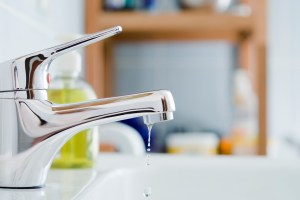
A constantly dripping faucet wastes about 15 to 20 gallons of water a day, water you pay for. If you have a faucet in an out-of-the-way place you do not often use, check it regularly to ensure it is not leaking.
Faucets usually drip or leak because the seals, washers, or O-rings inside are worn. Replacing the pieces that help seal the faucets is relatively easy, and many online resources can help you determine exactly what to do based on your faucet brand and configuration.
Here is one video that shows how to fix a faucet with two handles.
If you are not a do-it-yourself type, you may want to call a plumber to do the job. The cost of repairs can be recovered in just a few months of lower water bills.
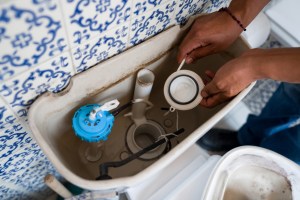
The toilet is the most common household water waster, but it may not be as noticeable as a dripping faucet. Toilets typically leak in two main areas: flush valves and tank floats.
Toilet Flush Valves
At the bottom of the tank is a flush valve that opens when you flush to allow water to move from the tank into the toilet bowl. If this valve does not close completely after the flush, water can continue to flow slowly into the bowl. The siphon mechanism that makes the flush happen ensures that the bowl does not get too full and overflow. Your toilet may appear to flush itself from time to time. This also means that water that leaks from the tank into the bowl moves into the sewer system. This water is wasted.
To find out if the flush valve is leaking, put a few drops of food coloring into the toilet tank. Wait 10 minutes then look in the toilet bowl. If the water in the toilet bowl is colored, the flush valve is leaking. Be sure to flush the toilet immediately after doing this test to be sure the food coloring does not stain the inside of the tank or the bowl.
A leaking flush valve can be repaired with advice and parts from a hardware or home improvement store.
Toilet Tank Floats
Toilets may also run when the water level in the tank is too high because of a float that is not properly adjusted. The tank fills with water through a fill valve. The fill valve is controlled by a float, which may look like a ball on an arm or a plastic cup that floats up and down the valve. When the water level in the tank gets too high, the excess water will escape through an overflow tube into the toilet bowl. Ideally, the water level in a full tank should be 1 to 1 and one-half inches below the top of the overflow tube. If the tank is getting too full, you need to lower the float level. On top of the fill valve, there will be a screw that attaches the float arm to the fill valve. You can adjust the height of the float by turning the screw. Turn the screw by quarter inches until the water level is correct.
A float cup on the fill valve is adjusted in much the same way. There will be an adjustment screw on the top of the fill valve. When you turn the screw, this will adjust the height of the float. Turn the screw a quarter of a turn counterclockwise to lower the float cup. Flush the toilet to see if the adjustment is correct. If the water in the tank is still too high, turn the screw another quarter of a turn.
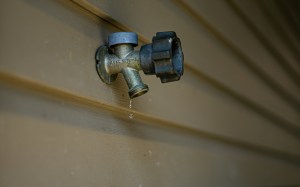
Check outside taps to see if they are running or dripping. If a tap is leaking, it may need washers replaced. Leaving a hose running even a bit can waste thousands of gallons of water over the summer. Remember to turn off faucets tightly.
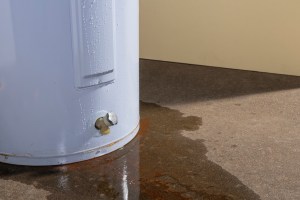
Check around your water heater to make sure it is not leaking. If you find water around the appliance, you may have a leak from the drain faucet at the bottom, or the top may have come unsealed.
High Bill, No Leak?
If you have a high water bill and are certain there is no water leak, submit a Meter Test Request Form so that meter staff can conduct a flow test on the meter to verify it is working properly. Customers are responsible for identifying and repairing all plumbing problems on their property.
High Bill, Unpreventable Water Release?
The Department is unable to refund metered water charges. However, if a one-time unpreventable water release caused an extraordinarily high bill, you may qualify for a sewer charge abatement, once per ten-year period for Newport service area only. Review the Sewer Abatement Request Form to verify eligibility criteria before submitting.
